― Reflections of a Historical Flâneur
On July 9, 2026, I visited Kellie’s Castle, nestled on the outskirts of Ipoh, Malaysia.
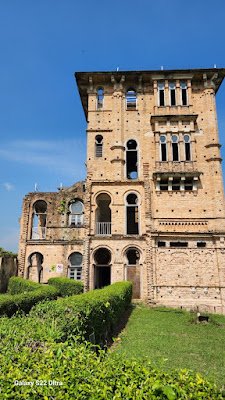
At first, I thought of it merely as another stop on a travel itinerary—a brief visit to explore an old red-brick mansion and snap a few commemorative photos.
Yet, by the time I prepared to leave, I was no longer an ordinary tourist consuming picturesque scenery.
I had become a “Historical Flâneur,” gently retracing the tender footprints of a man’s life, his profound love, and the quiet residue of passing time.
Kellie’s Castle: An Architectural Love Letter to a Devoted Wife
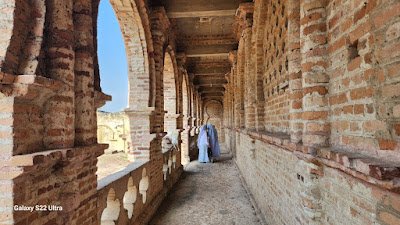
Many travelers call Kellie’s Castle an “unfinished ruin.”
Looking at the open-air rooflines, staircases suspended midair, and rooms frozen in perpetual anticipation, that description is certainly not wrong.
Yet to my eyes, Kellie’s Castle was never merely an abandoned estate.
It felt like a monumental, heartfelt letter written by Scottish plantation owner William Kellie Smith to his beloved wife, Agnes, and their family.
And even now, a whole century later, that letter remains open and unfinished.
Strolling through the estate, one notices details far ahead of their time: an empty shaft reserved for Malaya’s very first residential elevator, subterranean tunnels designed for refuge, and clever ventilation layouts created to shield the family from the oppressive tropical heat.
None of this felt like ostentatious luxury or colonial bravado.
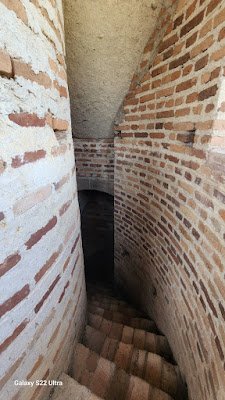
Rather, each brick seemed steeped in the quiet devotion of a husband who simply wished for his family to live safely, comfortably, and in peace.
Resting my palm against the sun-weathered brickwork, a quiet question surfaced:
Is it truly possible for one human being to love another with such boundless depth?
Then, another layer of history caused me to pause.
According to historical records and local lore, William Kellie Smith was remembered as an unusually compassionate master toward his migrant workers. When a virulent tropical epidemic swept through the workforce, he provided medical care and took genuine responsibility for their welfare.
If these accounts ring true, this castle cradles far more than romantic affection.
Alongside devotion to his family, a genuine respect for others and warm human dignity remain quietly embedded within these walls.
Yet destiny can be unforgiving.
In 1926, during a business voyage to Lisbon, Portugal, William died suddenly of pneumonia. In a single instant, the grand dream he had spent years meticulously crafting ceased forever.
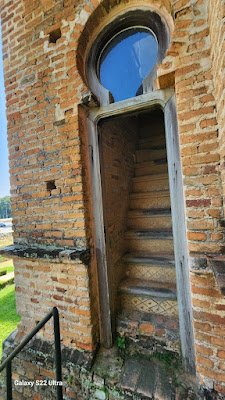
I lingered in those quiet, masterless hallways for a long time.
Standing before the stillness of the empty chambers, I found myself wondering:
What must Agnes have felt when she lost the love of her life?
Formal history leaves us with sparse details.
The documented fact is simply that following her husband’s untimely death, Agnes packed her belongings and returned home to Scotland, never to look back.
History records no written explanation for her departure.
Yet looking at stairs that were never climbed and the still void of the elevator shaft, I quietly imagine.
Perhaps every stone, arch, and corner of this estate carried the presence of her husband so vividly that staying was unbearable.
Sometimes, people do not leave because love has faded; they leave because they loved so deeply that the memories become too heavy to bear.
Of course, this is simply a contemplative sketch drawn by a Historical Flâneur upon the silent margins left behind by time.
For a long time, I have held the title of Historical Flâneur close to my heart.
To me, walking through history has never meant simply sightseeing antique monuments.
It means walking alongside the inner landscapes of the human souls who once breathed life into those spaces.
A tourist leaves with snapshots.
A historian archives dates and chronicles.
A Historical Flâneur, however, uncovers the quiet human warmth lingering in the stone, carrying it gently within his heart.
Kellie’s Castle taught me an enduring truth:
A person may not always leave behind a finished, flawless life.
Yet, one can always leave behind a life defined by warmth.
Even after a hundred years, travelers continue to visit Kellie’s Castle not merely for its eclectic architecture.
They come because a husband’s deep devotion and a human being’s quiet empathy still breathe softly among these weathered red bricks.
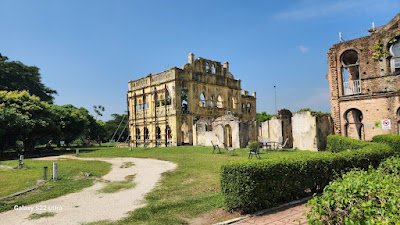
I did not simply return from visiting a castle.
I returned having read an unfinished letter that has endured across a century.
And today, that letter asks me—and perhaps anyone who comes across these words—a quiet question:
“A century from now, when you have departed this world, what kind of warmth will you leave behind?”
Historical Flâneur
History records the cold facts; I walk the quiet warmth of the human hearts left between them.