― Walking Through a City’s Yesterday and Today with a Single Stick
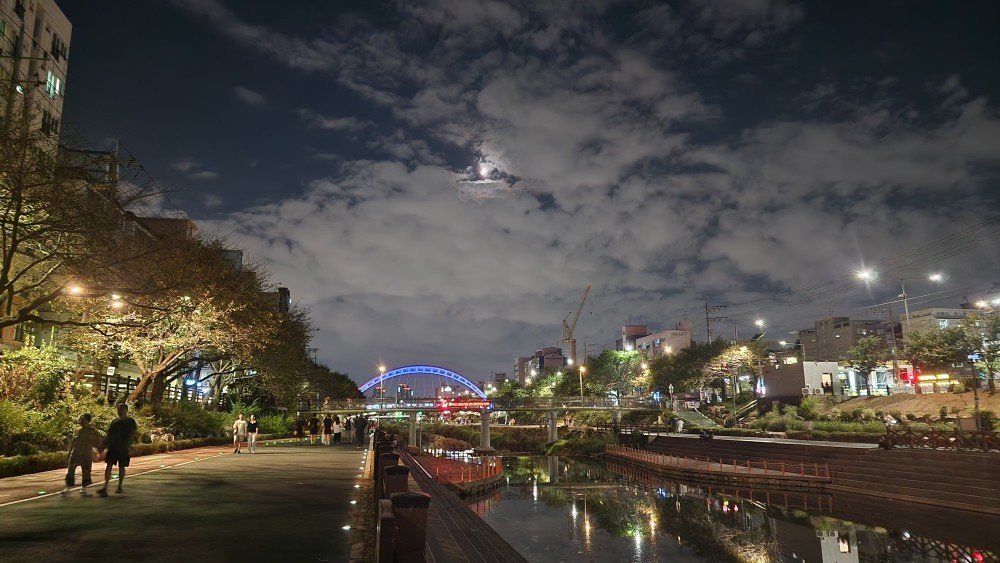
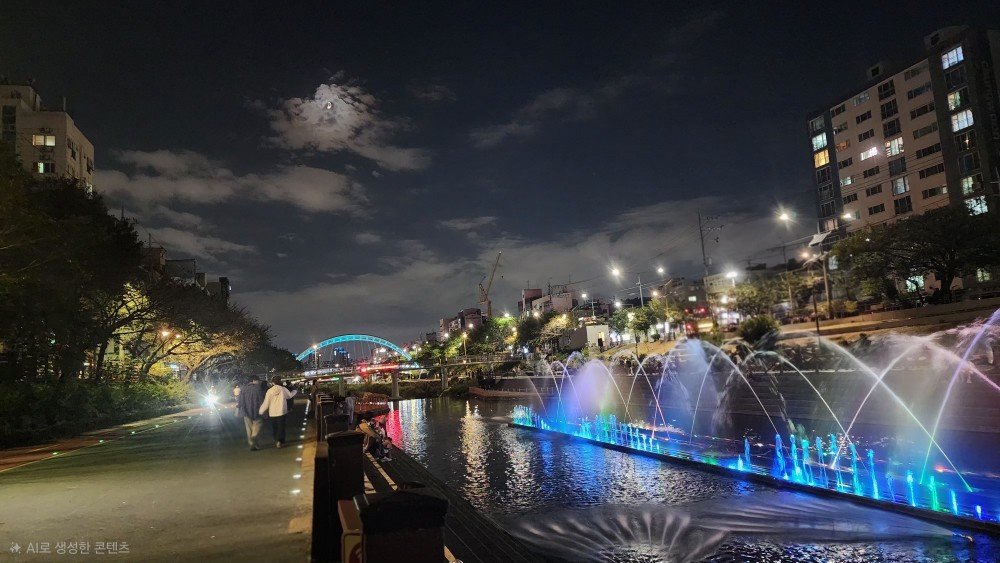
(Photo: The nocturnal walking trail of Bulgwangcheon Stream, where gentle moonlight layers atop shimmering urban reflections)
Written by Desmond
The morning air is crisp, cool, and clear.
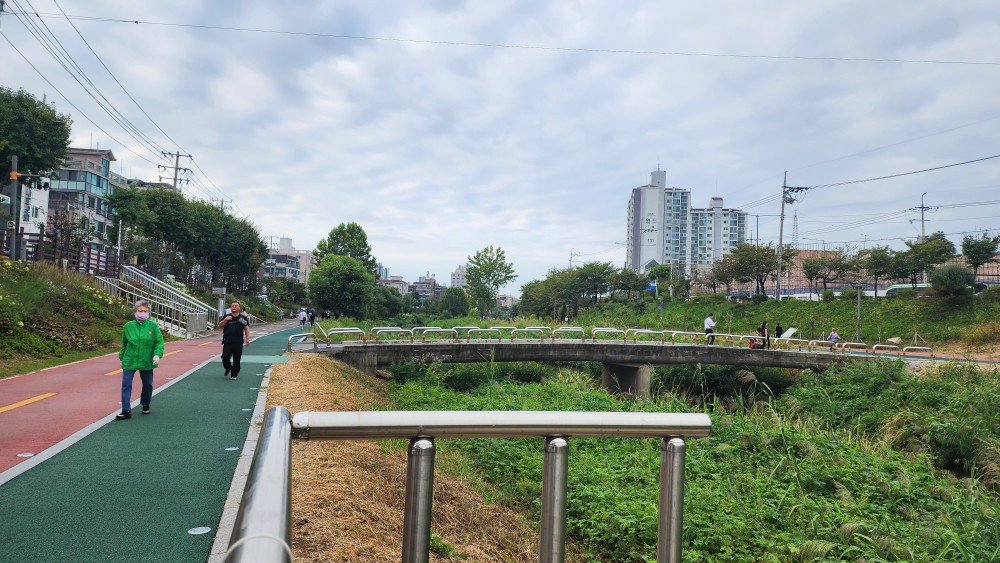
Along the green walking trail tracing Bulgwangcheon Stream, my walking stick strikes the pavement with a steady, rhythmic cadence.
‘Tap, tap.’
The quiet stream I encounter on my daily morning walks and this metallic sound offering steadfast support to my slightly stiff legs mark the beginning of my most honest conversation with the world today.
The stream before me is profoundly peaceful. Wisps of autumn clouds drift across the high sky, and a solitary grey heron stands motionless amidst the reeds by the bank, quietly watching the flowing water.
Along parallel paths—the red bicycle lane and the green pedestrian trail—neighbors open their mornings at their own personal rhythms. Some run vigorously with heavy, rhythmic breaths; others stretch stiff limbs to lively music; and a few take measured, careful steps forward.
To many, this place is simply a convenient neighborhood fitness track or an airy shortcut to work. In spring, cherry blossoms form sweeping canopies, and at night, musical fountains draw evening crowds together with soaring arcs of water.
Yet as I walk, I often pause.
Leaning lightly against my walking stick to watch the gentle current, my gaze gradually looks beyond the immediate scenery, descending into the unseen strata of time cradled by this humble stream.
Since retiring from corporate life upon reaching sixty, walking has ceased to be about consuming physical space. Instead, it has become an intentional act of retracing the footprints of time that once passed through it.
History does not dwell solely inside glass museum cases. Even beneath the soil and asphalt beneath my feet, and within the ordinary, unassuming routines of people passing by, history continues to accumulate quietly day by day.
Early morning: Neighbors opening their day along the green trail of Bulgwangcheon Stream, each at their own pace
Bulgwangcheon Stream: Tracing the Historic Post Station of Yeonseo
Bulgwangcheon (佛光川). In earlier centuries, this waterway was known by names such as Yeonseonae or Yeonsinnae.
Upstream, in what is now Eunpyeong-gu, stood Yeonseo Station (延曙驛), a major royal post station during the Joseon Dynasty. On the historic night of the Injo Restoration in 1623, Prince Neungyang marched toward Yeonseo Station to rendezvous with troops led by military commander Yi Seo.
Thus far, this is the history documented by official chronicles. Yet, I find myself lingering on the two Chinese characters that form the name Yeonseo: 延曙. Translated literally, it means “waiting for the dawn.”
One cannot claim with certainty that the name originated specifically because of that fateful rebellion. Yet on that historical night, men indeed gathered here under the cover of darkness, waiting for daybreak. When those two facts overlap like quiet serendipity, the flâneur’s imagination wanders slightly ahead.
Did water flow gently along this very stream bed that night?
What went through the minds of those tense riders as they gripped their reins tightly in the dark?
Did the sound of iron horseshoes pressing into damp earth mingle with the murmur of the brook?
I cannot know for sure, for recorded chronicles do not share such quiet details.
And so, as far as written records speak, I walk with history; where records fall silent, I walk forward in quiet imagination. That, in itself, is enough.
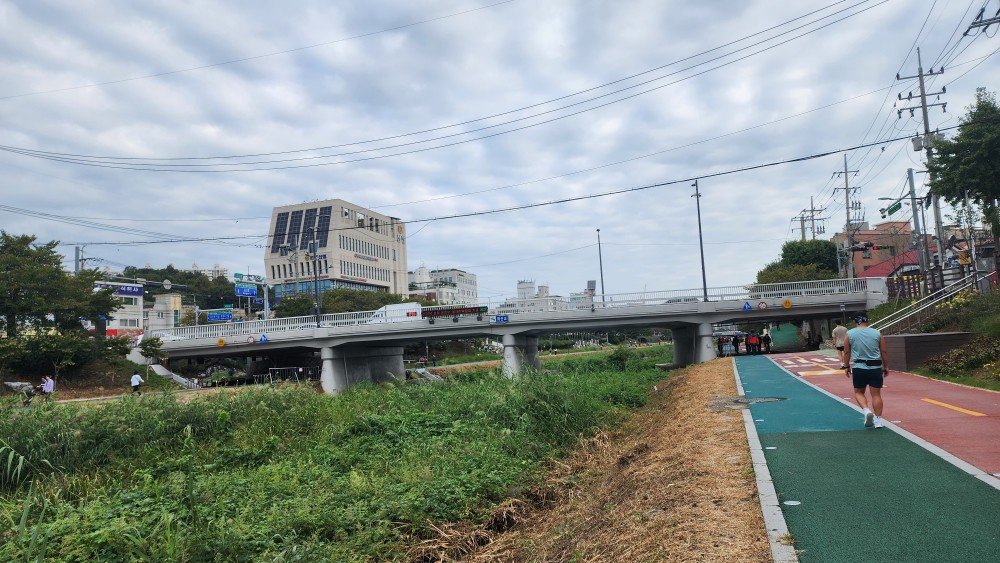
The bridges and waterways of Bulgwangcheon, quiet witnesses to generations of encounters and long waits
The history of this water does not belong solely to momentous nights when dynasties shifted. Government officials and station guards traveling to and from Yeonseo Station, as well as nameless wanderers journeying northwest of Hanyang (ancient Seoul), surely stopped to gaze upon this stream.
And there were countless everyday souls far beyond them: women crouching by the rapids washing laundry, farmers carrying drawn water toward nearby fields, merchants traveling toward markets, and travelers returning home after long journeys.
Reaching even deeper into the unrecorded past, long before writing existed, early inhabitants must have crossed this water, fished its shoals, tracked game, and sent evening smoke rising from hearths nearby.
Their names have vanished from all records. Official history chronicles triumphant kings, generals, and dramatic events, but water perhaps remembers the countless ordinary lives that left no written trace.
Human memories fade, but water continues its onward course. Tears washed through here; sweat mingled with the current; children’s laughter and weary sighs lingered along the banks before drifting away into the river.
Back Alleys of Bukgajwa-dong: Uncovering the Forgotten Scars of Modern Seoul
During my stroll, I climbed the levee steps toward the alleyways of Bukgajwa-dong in Seodaemun-gu to find a restroom.
Stepping just one single block away from the manicured parkway of Bulgwangcheon Stream, the entire texture of the air transformed completely.
Walking past modern apartment blocks and low-rise residential units into the rear block, a raw landscape bearing decades of undisturbed time unfolded before me.
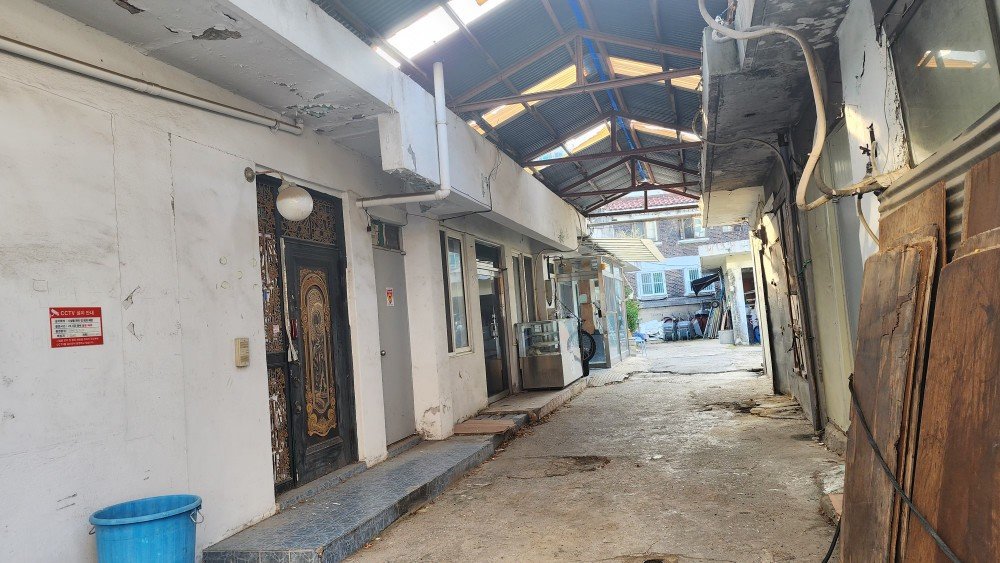
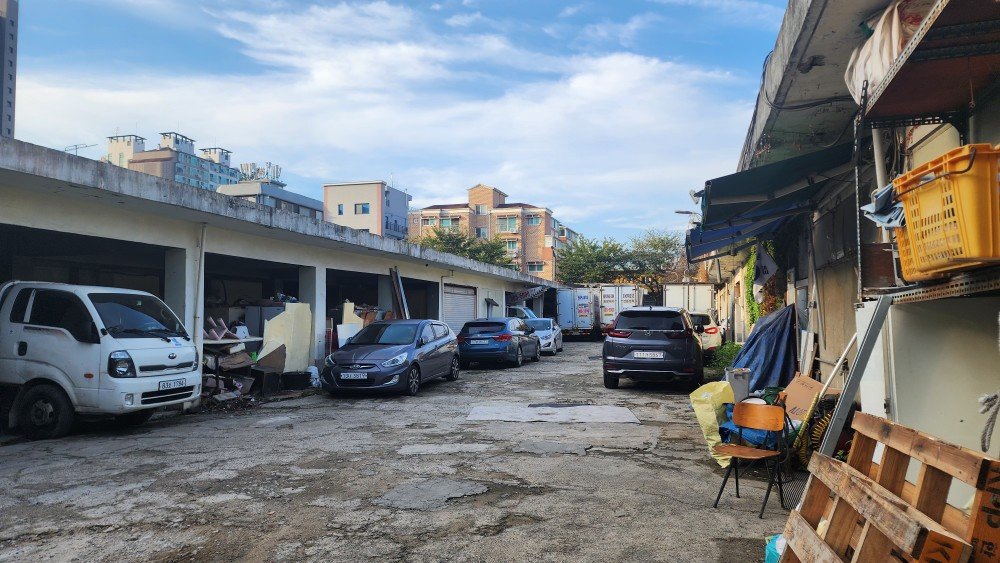
Plastic crates and scrap building materials were stacked unevenly along the narrow road. Beyond faded, single-story workshops and rusted accordion gates lay wide, rough gravel yards. Rusty steel roof trusses and weathered slate awnings sloped down, dimming the daylight in the quiet back alleys.
Here, looking as though time had paused before being swept away by redevelopment, lay the inner fabric and forgotten back alleys of the historic Seobu Central Market, established in 1978.
Beneath aged steel trusses and slate awnings, a corridor of passing time leading into the old Seobu Central Market
During the 1960s and 1970s, as downtown shantytowns were cleared across Seoul, displaced residents and urban poor pushed to the margins gathered along Bulgwangcheon Stream and nearby Moraenae. Makeshift encampments and communal shacks of ragpickers sprang up along vacant riverbanks, soon followed by scrap merchants who purchased reclaimed scrap metal, waste paper, and empty glass bottles.
Before an official market ever stood here, this rear block of patchwork fields and open dirt was likely a bustling, gritty sorting yard where collectors unloaded heavy wooden handcarts and woven baskets to sort the day’s salvage.
Even after the traditional market flourished, this web of survival remained tightly woven. Empty cardboard boxes and burlap sacks discarded by market stalls provided honest daily salvage for scrap collectors. After walking long hours pushing handcarts across the metropolis, collectors would return to modest back-alley taverns and soup stalls to catch their breath and soothe weary stomachs.
Discarded scraps from someone else became school supplies for children and warm evening meals for families in this very space.
The modest single-story workshops and open yards where small trucks still park bear witness to the grueling history of those who sustained life from the bottom up on the fringes of a rapidly rising Seoul.
A rear open yard carrying the living memory of scrap sorting grounds where collectors once unloaded heavy handcarts
Following the downstream flow of Bulgwangcheon leads toward the history of Nanjido. Starting in 1978, Nanjido served as Seoul’s official landfill, where an entire community survived by collecting recyclable materials from towering mountains of waste.
The scrap yards along Bulgwangcheon and the waste mounds of Nanjido were thus connected along this modest waterway like a single, resilient web of urban survival.
Yet I have no desire to romanticize their hardship. Extreme poverty was never something picturesque. The daily struggle to survive amidst dust, bitter cold, sweltering heat, and foul odors should never be lightly beautified.
Still, I wish to remember one enduring truth: they, too, lived and endured in this city with quiet dignity. Beneath the clean, modern streets we walk today lie dense layers of time left behind by thousands of nameless individuals who persevered through the city’s roughest hours.
Stepping Onto the Road: Walking for Life and Renewal
Looking out across this ground of tenacious survival, I reflect upon how my own journey began.
I often excused my retirement with the graceful remark that once I reached sixty, I would do only what I truly wished. Yet deep down, I kept the real, unspoken reason hidden away in my heart.
During my long corporate years commuting from Eunpyeong-gu across the capital to Hanam, I left home before six in the morning and rarely returned before nine at night. In that relentless grind, regular exercise was out of the question, and every spare moment went toward catching up on lost sleep. I barely walked a thousand steps a day. Observing my deteriorating muscles and declining health, I finally visited a doctor, where a diagnosis of high blood pressure came with a physician’s stark words that struck straight to the heart:
“In modern society, no one has free time to exercise. People carve out time to exercise simply to stay alive.”
A decision had to be made before my health unraveled completely. Stories of individuals recovering from strokes through walking, and those who managed severe hypertension and diabetes through persistent foot travel, pointed out the path I needed to follow. To survive and reclaim my life, I stepped away from the corporate wheel and took to the open road.
Thinking of their struggles, my memory unexpectedly summons a young boy from a distant shore.
In the early 1970s, on the remote island of Sinui-do in South Jeolla Province where kerosene lamps lit the night, there lived a boy with a shaved head who gazed out at the sea, wondering what lay beyond that distant waterway.
That boy was me.
Back then, I knew nothing of Bulgwangcheon Stream, nothing of Nanjido, nor could I imagine that I would spend decades living in this sprawling metropolis of Seoul. I was simply curious about what lay on the other side of the water, wondering how far the road might reach.
Decades flowed past. The boy became a young man arriving in Seoul, and after several more decades of labor, he now walks along Bulgwangcheon Stream, leaning upon a simple walking stick.
When you reflect upon it, human life resembles a waterway: its origin is clear, yet the meandering turns of its eventual destination remain unknown.
Just as a small creek meets other tributaries to form a wide river that ultimately greets the ocean, so too does a human life shape its journey through countless meetings with people, places, and seasons of time.
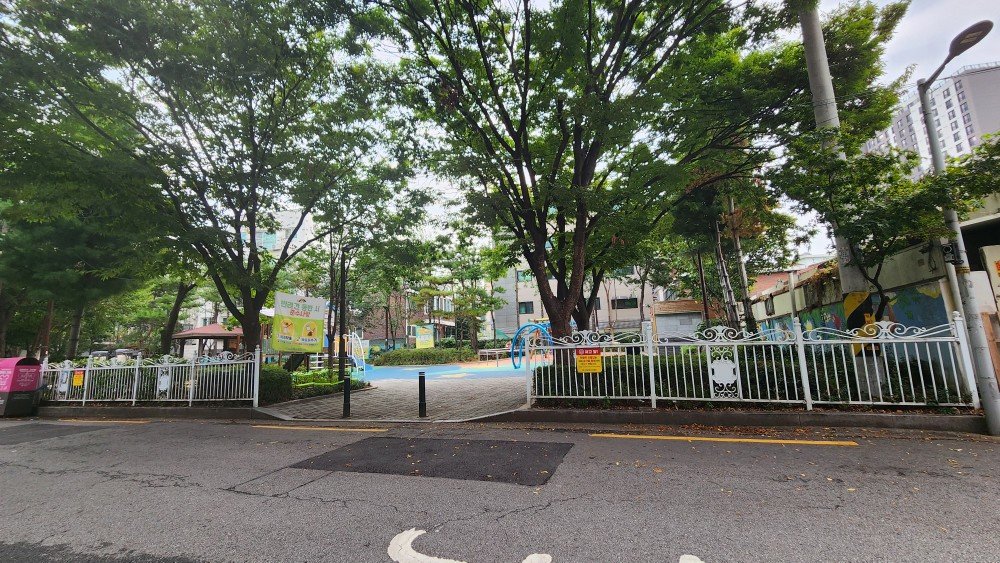
Geokkuro Children’s Park, built atop ground once marked by hardship, now offering lush green shade to neighborhood families
Today, Bulgwangcheon Stream looks remarkably different from its past.
Once a seasonal stream that dried up unless heavy rains fell, it was gradually restored through ecological rehabilitation and steady water supply projects into the inviting sanctuary it is today. Neighbors pause by the banks to watch fish swim, and crowds gather beneath blooming cherry trees in spring.
Downstream, Bulgwangcheon joins Hongjecheon Stream, leading further toward World Cup Park and the transformed terrain of Nanjido. What was once an immense mountain of metropolitan garbage has grown into lush green woodlands where families walk under leafy shade.
Time sometimes erases deep wounds, and at other times, builds completely new, gentler landscapes over past scars.
I recall walking along Bulgwangcheon a few evenings ago.
Beneath the dark indigo night sky, the musical fountain sent colorful illuminated jets soaring in synchronization with the melody. Children and couples laughed as they watched the dancing colors reflected on the water.
Watching them, a quiet thought came to mind: Perhaps this is how history completes itself.
History is never merely a catalog of celebrated leaders. Atop the lives of those who quietly weathered darker eras, the peaceful routines of ordinary people today are gently layered.
And far into the future, this very morning we shared, walking and smiling along the water, will also become a quiet layer of history.
Illuminating the moonlit water, the musical fountain of Bulgwangcheon brings peaceful comfort to evening strollers
Feeling the steady balance of the stick in my hand, I resume my slow steps forward.
I am no longer in any hurry. Pushing firmly off the ground with renewed strength in my legs, I walk strictly to my own breath.
For to me, lingering a little longer to read the breath of people left along the road and holding their time in my heart has become far more precious than walking fast.
Atop the straw shoe prints of nameless travelers from centuries ago,
atop the tense sound of horseshoes on the night of historical rebellion,
atop the heavy wooden cart tracks of ragpickers who traversed the dirt yards of Seobu Market,
and atop the vigorous strides of neighbors running in the morning sweat,
I quietly place my own honest footprint—one taken to heal and reclaim life on this open road.
With each deliberate step, my breath finds its natural rhythm.
And then, one step more.
A path does not exist solely to reach a final destination. Perhaps walking a road is an unhurried effort to understand the hearts of those who walked it long before us.
The waters of Bulgwangcheon Stream flow silently today, and I walk gently alongside their current.
As far as the records speak, I walk with history;
Where the records fall silent, I walk forward in quiet imagination.