Along the banks of Bulgwangcheon Stream, where gentle ripples catch the seasonal breeze and grey herons rest unbothered, lies a favorite green haven for northwestern Seoul—and an inviting trail for anyone setting out on foot in search of authentic Kalguksu (Korean knife-cut noodle soup).
Strolling downstream from Eunpyeong toward the Han River near Jeungsan Station, you will encounter the gentle, sweeping arch of a pedestrian bridge named Haedamneun Bridge—a poetic moniker that translates to “the bridge that holds the sun.” Crossing over the clear, murmurous water, the city quietly shifts beneath your feet from Eunpyeong-gu into Bukgajwa-dong, Seodaemun-gu.
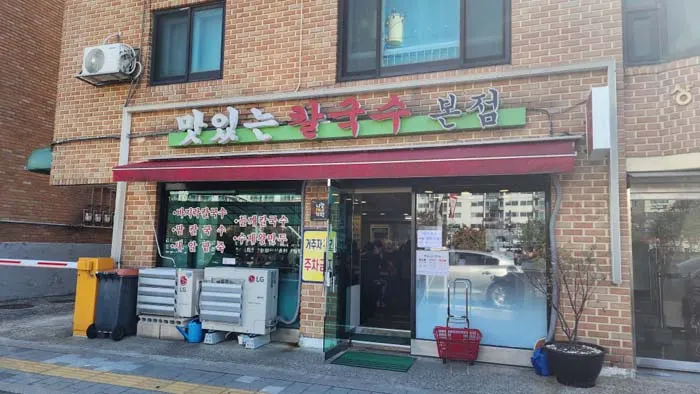
Just across the bridge, right along the single-lane road bordering the stream, the warm, wheaty aroma of boiling broth drifts into the air. Here stands Masinneun Kalguksu Main Branch (Delicious Kalguksu), a beloved neighborhood institution housed on the ground floor of an unassuming red-brick building.
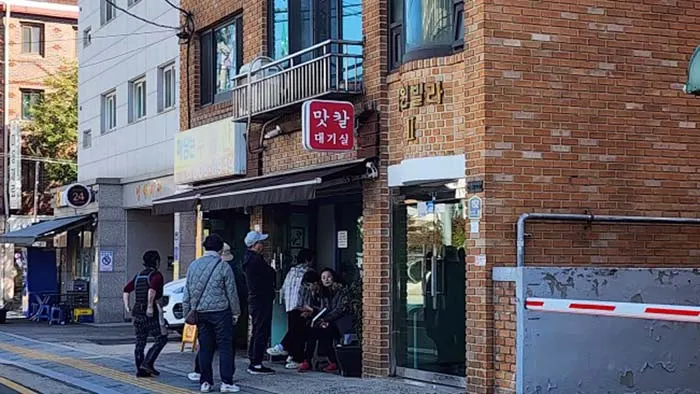
Its popularity needs little explanation: the building next door even houses a dedicated, sheltered waiting room for patrons. During lunch and dinner hours, locals gather here in quiet anticipation, making this spot a cherished neighborhood pantry for those whose daily lives trace the stream.
Behind this unassuming bowl of hand-cut noodles lies a rich tapestry of Korean food history and culture, along with a time-honored table ritual best enjoyed step by step.
1. The Tale of Kalguksu: From Aristocratic Delicacy to People’s Soul Food
Today, kalguksu (knife-cut noodle soup) is the quintessential Korean comfort meal—unpretentious, hearty, and found in nearly every alleyway. Yet a look back into its past reveals that it was once anything but ordinary.
A Rare Treat of the Joseon Aristocracy
Centuries ago, the Korean peninsula’s climate and soil were poorly suited for cultivating wheat. Fine wheat flour (jingaru, 眞粉) was rare and costly—far more precious than everyday polished rice. Historical Joseon dynasty culinary manuscripts such as Gyugon Siuibang (Eumsik Dimibang) and Jubangmun describe noodle dishes not as everyday fare, but as rare delicacies reserved for auspicious celebrations like sixtieth-birthday banquets (hwangap), grand wedding feasts, or as an act of heartfelt hospitality for honored guests on sweltering midsummer days.
How War and Scarcity Shaped a National Staple
The transformation of flour noodles into everyday comfort food came in the wake of the Korean War during the 1950s. Facing acute postwar food shortages, substantial shipments of relief wheat flour arrived from the United States. Throughout the 1960s and 1970s, the Korean government actively encouraged grain and flour consumption through national campaigns (honbunsik jangnyeo undong).
Resourceful mothers across the country kneaded the newfound flour, rolled the dough thin, cut it by hand, and tossed the noodles into boiling broths flavored with a handful of dried anchovies or fresh clams. It was warm, filling, and capable of stretching a modest larder to feed an entire family. In this way, kalguksu became the enduring soul food of ordinary Koreans—a gentle, comforting bowl that saw a generation through hardship.
2. Warding Off Ill Fortune: The Tradition of Red Bean Noodles
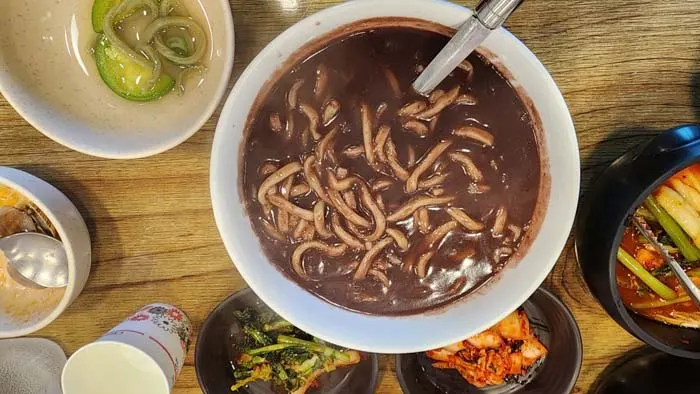
Among the large handwritten dishes adorning the front glass window, two stand out immediately: Pat-kalguksu (knife-cut noodles in red bean broth) and Pat-ongsimi (red bean soup with chewy rice balls).
In Korean food culture, red beans (pat) carry a meaning that transcends ordinary nourishment. Since ancient times, they have been an auspicious symbol believed to chase away misfortune and usher in good health.
- Dispelling the Dark with Pure Sun: In traditional folk belief, the deep crimson hue of the red bean represents yang—the life-giving force of the sun and fire. On Dongji (the Winter Solstice), when night lingers longest and the cold, shadowy energy of yin peaks, families brewed thick red bean porridge, scattering spoonfuls near the doorway to ward off illness and ill fortune while praying for domestic peace.
- A Hearty Meal, Not Just a Sweet Dessert: While Western and Japanese culinary traditions often transform red beans into sweet confections or pastry pastes, Korean kitchens simmered whole red beans until tender, straining them into a savory, silky, thick purée to be savored as a wholesome main course. Paired with wide, chewy noodles or soft glutinous rice dumplings, it served as an invigorating, body-warming tonic against the chill.
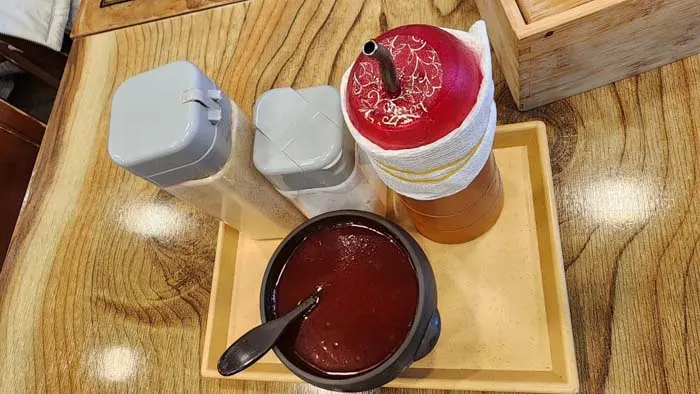
- The Alchemy of Salt and Sugar: On every table sit two humble condiments: salt and coarse sugar. Some enjoy the soup in its purest, savory form with just a pinch of salt to coax out the deep, nutty earthiness of the bean. If you lean toward sweetness, local wisdom suggests adding a small dash of salt before the sugar; this gentle contrast enhances the natural sweetness without needing a heavy hand, delivering a clean, layered flavor that reflects an old, enduring culinary insight.
3. Savoring the Experience: A 3-Step Local Dining Guide
At this neighborhood noodle house, a warm and nostalgic ritual unfolds step by step.
Step 1. The Appetizer Ritual: Steamed Barley Rice and Radish Kimchi
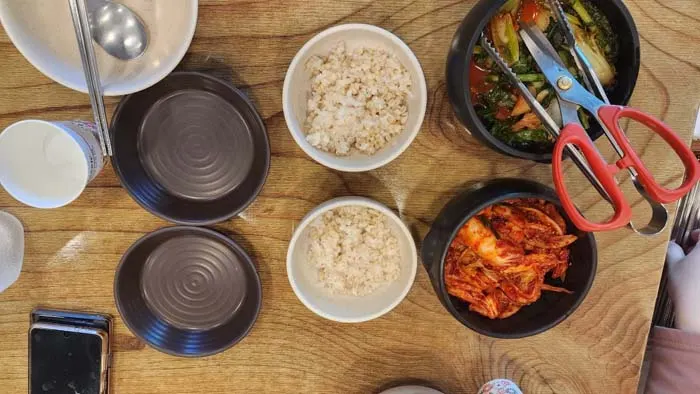
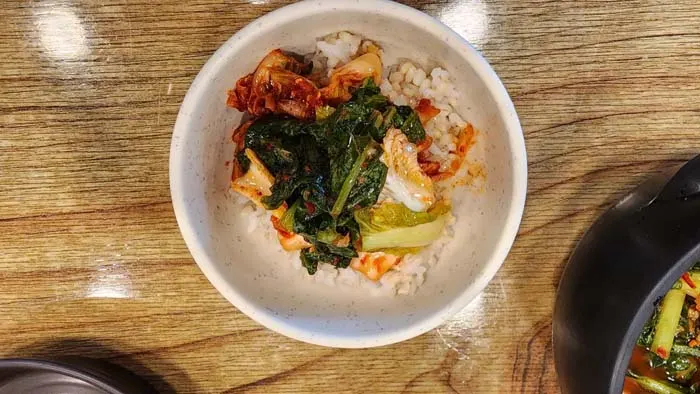
Before your noodles arrive, the table is set with small stainless bowls of steamed whole-grain barley (kkongboribap) alongside two traditional earthenware pots filled with freshly made kimchi: tender young radish leaves (yeolmu-kimchi) and crisp napa cabbage (geotjeori).
- Serve the Kimchi: Lift the lids of the earthenware crocks and transfer generous portions of tangy young radish kimchi and crisp, fresh cabbage kimchi onto your small plate.
- Build the Bowl: Spoon a healthy portion of chopped radish kimchi directly over the plump, chewy grains of barley.
- Season to Taste: Drizzle a generous splash of fragrant toasted sesame oil from the tabletop bottle, followed by a dollop of red pepper paste (gochujang).
- Mix Gently: Use your spoon turned slightly sideways to toss the bowl lightly without crushing the barley grains. The pleasant pop of the barley, the tart crunch of the greens, and the nutty perfume of the sesame oil awaken the palate in an instant.
Step 2. The Bounty of the Sea: Hand-Cut Clam Noodle Soup
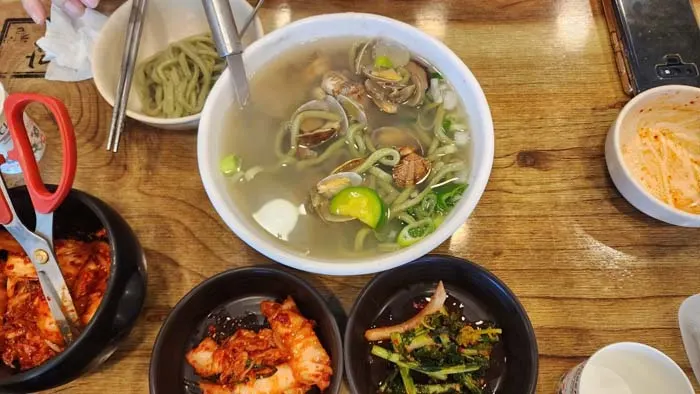
Just as your barley bowl is emptied, an oversized, steaming basin of clam kalguksu arrives at the center of the table.
- Jade-Colored Hand-Cut Ribbons: Kneaded with natural, wholesome greens, the noodles carry a delicate jade hue. Cooked to a tender, springy tooth, they offer an immediate, satisfying chew that clings wonderfully to the broth.
- Pure, Briny Broth: Take your first sip straight from the clear broth before stirring the dish. Well-purged Manila clams yield a delicate, pristine brine—uncluttered, deeply comforting, and naturally refreshing.
Step 3. The Harmonious Finish: Pairing Noodles with Fresh Kimchi
The defining companion to any great noodle bowl is newly tossed geotjeori. Wrapping a steaming nest of chewy jade noodles with a cool, spicy piece of crisp cabbage kimchi reveals why this simple pairing has captured Korean hearts for generations.
From the pleasant stroll across Haedamneun Bridge to this unassuming roadside nook along the stream, a warm bowl of soup here is more than just dinner. It carries the quiet resilience of modern history and the humble wishes of ancestors who sought warmth, peace, and togetherness around a shared table.
When an evening stroll along Bulgwangcheon brings a cool riverside breeze, cross the sunlit bridge and take your place at this welcoming table.