Table of Contents
After leaving self-checkout instructions for my departing guesthouse guests, I rose in the early dawn, pulling my luggage through the quiet morning streets toward the subway station. It was my first time taking the airport train from Seoul, heading to catch an 11:00 AM flight bound for Okinawa.
My 4-day, 3-night journey across Okinawa, spanning from October 11 to October 14, was far more than an ordinary holiday retreat in a tropical haven. It became a quiet flâneur’s pilgrimage—a contemplative walk that continually led me to peer into street corners for the lingering shadows of the lost Ryukyu people. The sudden squalls drenching the indigo sky mirrored the tempestuous, unpredictable fate this island has endured across centuries. Sheltered beneath quiet eaves awaiting the clearing skies, I met the tender, sorrowful breath of the ancient Ryukyu Kingdom, preserved through long generations of endurance.
1. 4-Day Okinawa Itinerary Overview
Okinawa stretches long from north to south, making regional grouping essential for an unhurried, efficient itinerary. Based in Naha, this journey balanced a flexible self-drive rental tour through the historical south with a comprehensive day-bus tour across the rugged north.
- Day 1 (Arrival in Naha & Urban Exploration): Incheon Airport Departure ➔ Arrival at Naha Airport ➔ Ryubo Department Store (Rakuen Cafe) ➔ Local Dinner at Omoro Dunchi
- Day 2 (Southern Rental Car Tour & Shurijo Castle): Nirai Kanai Bridge ➔ Cape Chinen Park ➔ Okinawa World (Gyokusendo Cave) ➔ Shurijo Castle Park ➔ Senagajima Umikaji Terrace ➔ Local Chinese Dinner
- Day 3 (Northern Traverse Bus Tour): Okinawa Churaumi Aquarium ➔ Kouri Island Beach ➔ Okashigoten (Onna Branch) ➔ Cape Manzamo ➔ Chatan American Village
- Day 4 (Departure & Return): Lunch at Naha Airport ➔ Departure ➔ Arrival at Incheon Airport
2. Day-by-Day Travelogue
Day 1: At the Crossroads of Modernity and Tradition in the Rain
Stepping out into Naha Airport to begin this 4-day Okinawa journey, my first impression was the polished, gleaming efficiency shared by major international gateways anywhere in the world. Past the third-floor dining concourse, fourth-floor food hall, and bustling pop-up markets, I settled down near the terminal for a hearty first meal—a freshly fried, thick tonkatsu set. Yet before I could take my first genuine steps across the island, heavy charcoal clouds gathered over the southern sky, unleashing a torrential downpour. It felt as though the island was asking me to pass through its veil of rain before showing its true inner landscape.
Seeking shelter, I made my way to the Ryubo Department Store at Palette Kumoji near the Okinawa Prefectural Government building. Though situated in the middle of a sleek modern commercial space, a quiet cafe tucked inside the second-floor “Rakuen Department Store” offered an unexpected passage back in time. Outside the glass, heavy curtains of rain soaked the streets of downtown Naha; in my hands rested a rustic, weighty ceramic mug shaped with coarse clay. Bold arabesque vine patterns (karakusa) were swept across the surface in deep cobalt glaze—this was Yachimun (やちむん), the traditional earthenware of Okinawa.
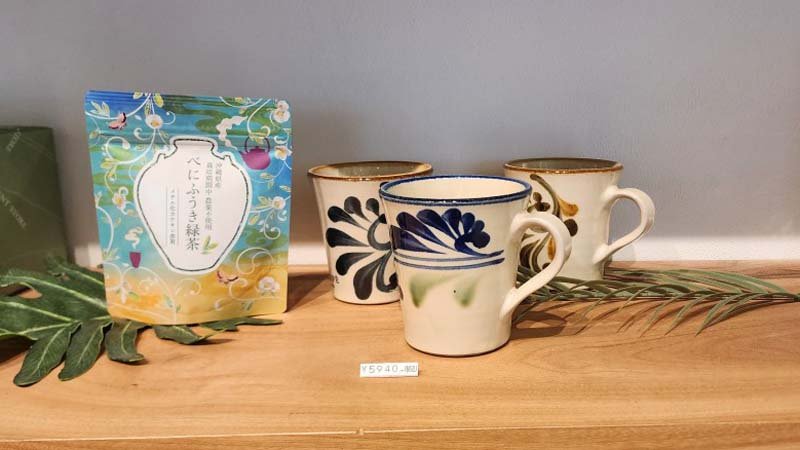
Looking at identical cups lined neatly on wooden shelves, I contemplated the layers of time cradled within this pottery. It carried the labor of ancient Ryukyuan potters who blended water and rough earth from barren, coral-crushed soils, firing their kilns through patience and hardship. Though it held an everyday cup of tea, the earthy warmth of the island clay served as a quiet bridge connecting the ancient hours of Ryukyu with modern Okinawa today.
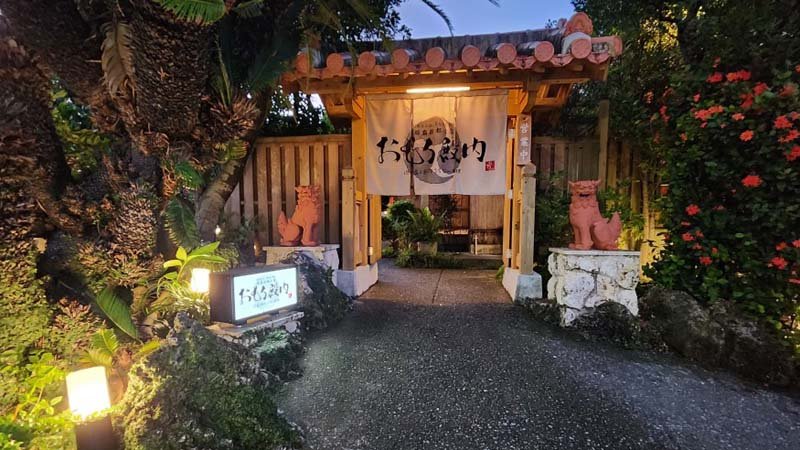
As the rain subsided in the evening, I stepped beneath the red-tiled gateway of Omoro Dunchi in Naha’s Shintoshin district. Blurring the line between tavern and traditional eatery, the table before me unfolded like an open book of island heritage: resilient wheat-gluten Fu Chanpuru; bitter melon paired with firm island tofu in Goya Chanpuru; crisp seaweed tempura served with fragrant purple mineral salt; pungent pickled island shallots (Shima Rakkyo); and savory fried rice perfumed with wild mugwort (Fuchiba). Finishing with a bowl of chilled brown-sugar Zenzai, that rich dining table revealed the tenacious vitality of the Ryukyu people, who weathered harsh oceanic winds and unforgiving limestone ground with quiet grit.
Day 2: Solitude of the Ryukyu Kingdom Etched in Coral Stone Walls
On the second morning, I rented a car to explore the historic coastlines and cultural landmarks of southern Okinawa. Under a temperamental subtropical sky where blazing sunshine and sudden cloudbursts alternated in minutes, a dual-purpose UV umbrella proved indispensable for an unhurried flâneur. The flimsy clear umbrellas offered by hotel lobbies were half-measures against such intense sun and sudden squalls.
Driving toward the southeastern coast, I came upon the Nirai Kanai Bridge, sweeping down along coastal cliffs in a vast, graceful S-curve toward the sea. Looking out over the turquoise waters along that bowed highway stretching toward the legendary paradisiacal realm of the ocean gods, my chest opened wide to the ocean breeze. At Cape Chinen Park, I paused beneath a red-tiled gazebo; the coral-fringed sea was dazzlingly blue, yet remembering the great maritime trading empire that once sailed these waters left a lingering, quiet ache. Walking through the subterranean chill of Gyokusendo Cave at Okinawa World—where 300,000 years of nature hung overhead in stalactite icicles—the outside glare vanished into absolute stillness, punctuated only by the rhythmic dripping of ancient water.
In the afternoon, my footsteps led to Shurijo Castle, the heart of the Ryukyu Kingdom and the site of its deepest scars. The gently curved coral limestone ramparts, the understated red gateway of Zuisenmon, and the vermilion pillars of Kobukumon came into view. Unlike the severe, angular geometry of mainland Japanese castles or the colossal scale of Chinese imperial palaces, these rounded, modest stone paths felt deeply intimate. Standing upon the Eastern Lookout overlooking Naha, a profound stillness settled over me. I could visualize the tragic dilemma of Ryukyu kings who, following the 1609 invasion by Japan’s Satsuma domain, had to conceal Japanese influence beneath strict surveillance while entertaining Chinese envoys to maintain the delicate illusion of an independent kingdom.
At dusk, the coastal panorama from Senagajima Umikaji Terrace offered another vantage of contemporary Okinawa: commercial airliners descending low over the waters as golden twilight fractured between purple storm clouds. That evening, I dined at a neighborhood Chinese restaurant near my lodging, savoring crisp shredded pork with bell peppers (Qingjiao Rousi), fluffy fried rice, crispy Youlinji chicken, and crunchy fried noodles (Katakisoba). Tasting such familiar continental flavors on this isolated island verified, right at the tip of my tongue, centuries of deep oceanic exchanges.
Day 3: Traversing the North: Overlapping Shadows of Colonization and the Cold War
For the longest leg of this 4-day itinerary, I boarded a day-bus tour departing early from the Prefectural Government office to traverse the northern reach of the island. Covering over 180 kilometers round-trip across ten and a half hours, it was a demanding schedule that inevitably constrained a contemplative stroller’s freedom. Moving at the prescribed pace of an organized group was physically demanding for my slightly stiff legs, yet through the bus windows along Route 58, the brilliant coastal waters spoke boundless stories.
At the Okinawa Churaumi Aquarium, the massive whale sharks gliding effortlessly above our heads in the Kuroshio Sea tank were mesmerizing, and the joyful leaps of dolphins at the Okichan Theater framed by the open sea and Ie Island offered an exhilarating moment of release. Later, passing the vivid emerald waters of Kouri Island, I stood upon the cliff of Cape Manzamo. What held my gaze was not the famed elephant-trunk cliff itself, but a weathered stone monument nearby inscribed with a poem by Emperor Showa commemorating Okinawa’s 1972 reversion to Japan. Right alongside nature’s breathtaking handiwork lay the sorrowful historical residue of Japanese imperialism and wartime loss.
The journey concluded at Chatan American Village, which presents the most surreal juxtaposition of Okinawa’s multifaceted identity. Shaped by twenty-seven years of postwar U.S. military administration, the area bursts with pastel American facade architecture, flashing neon, and giant whimsical crepe sculptures. Atop native Ryukyuan heritage rests Japan’s forced annexation, over which looms the enduring footprint of American military installations. This vibrant, contradictory landscape serves as an open-air stage testifying to Okinawa’s layered, complex history. My body was exhausted, but standing beside waters so carelessly pristine while contemplating past warfare and foreign bases left my thoughts tangled in deep reflection—a shadow of colonization and Cold War realities distinct from the multicultural tapestry I encountered during my month-long stay in Penang.
Day 4: Returning with Lingering Echoes — Mourning Ryukyu, Our Neighbor in the Mirror
Before boarding my flight home on the final morning, I finished a quiet bowl of Mapo Tofu rice at Naha Airport, gathering the scattered reflections of this 4-day walk. As initial novelty settled into familiar appreciation, I boarded the plane with a gentle promise to return whenever the flavors of this island called to me again.
Reflecting upon the journey back home, the history of the Ryukyu Kingdom mirrors our own with a piercing clarity. A peaceful, island nation that once prospered through gentle maritime trade was caught between the colliding ambitions of continental and oceanic superpowers. Stripped of its sovereignty, forced to surrender its native tongue (Uchinaguchi) and heritage through harsh assimilation policies akin to the forced name changes of our own colonial era, and finally sacrificed as a bloody buffer to buy time for the mainland during the closing months of World War II.
These historical tribulations closely parallel Korea’s modern history, shaped by foreign invasions, national division, and devastating conflict. The centuries-old records during the Joseon Dynasty—where stranded Ryukyu sailors were cared for with devotion and returned safely, just as shipwrecked Koreans were warmly embraced by Ryukyu—were never mere historic coincidences.
Yet in the face of such wounds, the Ryukyu people never sank into bitterness. Plucking the three strings of the snakeskin Sanshin, they sang and danced their sorrows away. Within their generous hospitality and warm smiles lives the quiet resonance of our own Han (deep sorrow) and Heung (joyous resilience)—the profound ability to transform deep historical pain into life-affirming warmth.
Okinawa felt like a kindred spirit precisely because its soul, having preserved human dignity and warmth through unimaginable trials, touches ours so closely. Although my suitcase held only a few photographs and quiet memories, the resilient, dignified breath of Ryukyu that bloomed through wind and rain remains within my heart as an enduring historical perfume.
3. Essential Okinawa Travel Tips & Checklist
Practical tips and essentials drawn directly from four days on the road across Okinawa:
- Weather Preparedness: Okinawa’s climate shifts rapidly from intense tropical sun to sudden squalls. Instead of cheap vinyl umbrellas, carry a sturdy, blackout UV-blocking folding umbrella that handles both relentless sunlight and heavy downpours.
- Transportation Strategy: Naha and the southern historic areas are convenient to navigate via rental car or the Yui Rail monorail. The northern highlights (Churaumi, Manzamo) require significant driving time; if you wish to avoid driving fatigue, a 1-day bus tour is a practical alternative, though you should mind your physical pacing to keep up with tight group schedules.
- Authentic Cuisine: Unique specialties such as Chanpuru (bitter melon and wheat gluten stir-fries), seaweed tempura (Mozuku), and traditional Okinawa Soba carry distinct cultural identities separate from mainland Japanese cuisine. Be sure to spend an evening at a local izakaya or traditional diner in Naha.